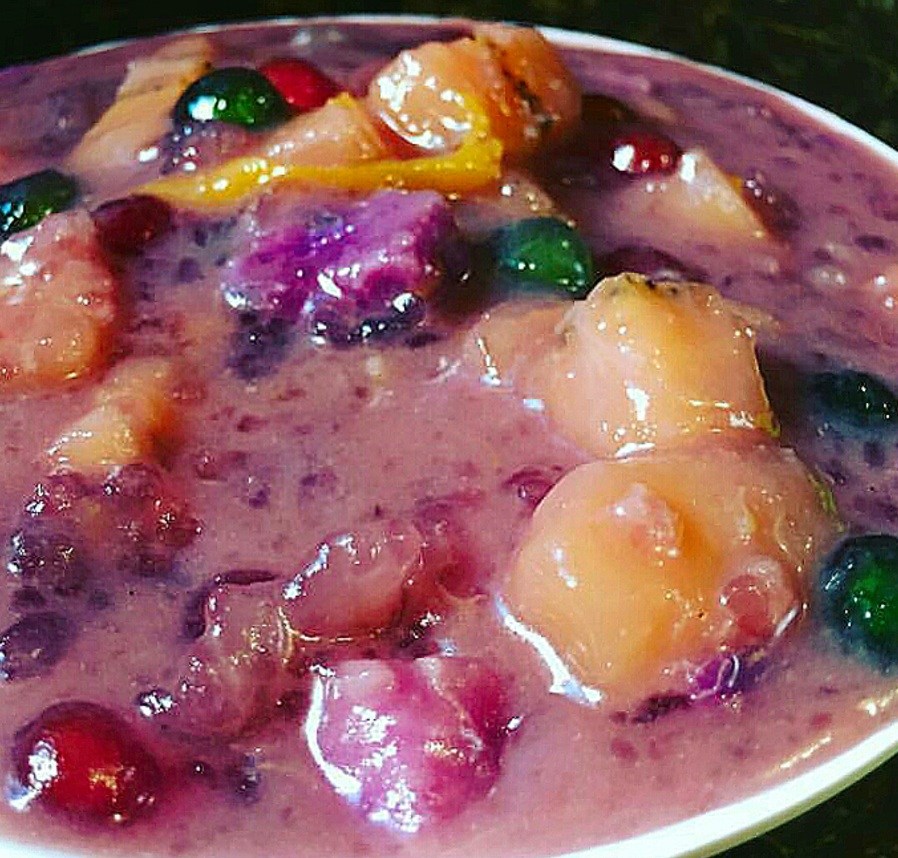
Binignit is a type of fruit and tubers stew cooked in coconut milk. This Filipino meryenda dish originated from the Visayas region in the Philippines. It is mostly similar to Ginataang Halo-halo,except that the latter uses glutinous rice balls or bilo-bilo as part of the ingredient. In addition, binignit suggests the use of Muscovado sugar and “landang” (also known as palm flour jelly balls).
These ingredients makes it different. Cooking binignit is quick and easy. Everything should be straightforward provided that all the ingredients are prepared beforehand. Tapioca pearl is what I used in this recipe as an alternative to landang. Although it has no taste at all, it does give this dish a nice texture and helps make it look more appetizing. This is the ingredient that should be prepare beforehand because It will take a bit of time to prepare sago (Filipino term for tapioca pearl). It has to be boiled for a few minutes and soaked in cold water. As long as your sago is ready, everything should be in a breeze.
I enjoy eating binignit because it has the right amount of sweetness and I can easily distinguish the flavors from each ingredient. During meryenda (snack time), I like to have my dish warm, or even hot off the pot. However, I prefer it cold or at least chilled if I am having it for breakfast.
Binignit is delicious Visayan afternoon snack. It is a thick soup of assorted fruits and root crops stewed in coconut milk with Tapioca pearls. Tapioca pearls is the one that I love the most in Binignit. The best sweet dessert and comfort food of Filipinos for afternoon snack. Binignit is among the most favorite menu for Holy week. Holy week is not complete without our favorite merienda since childhood, Binignit! Binignit is a Visayan dessert soup from the central Philippines.
The dish is traditionally made with glutinous ricecooked in coconut milk with various slices of sabá bananas, taro, and sweet potato, among other ingredients. It is comparable to various savoury and dessert guinataán (coconut milk-based) dishes found in other regions. But while the latter adds bilo-bilo to its list of ingredients, binignit uses milled glutinous rice. In this rich concoction, various tubers such as gabi, kamote and purple yam along with sago pearls, jackfruit strips and saba bananas are stewed in sweetened coconut milk.
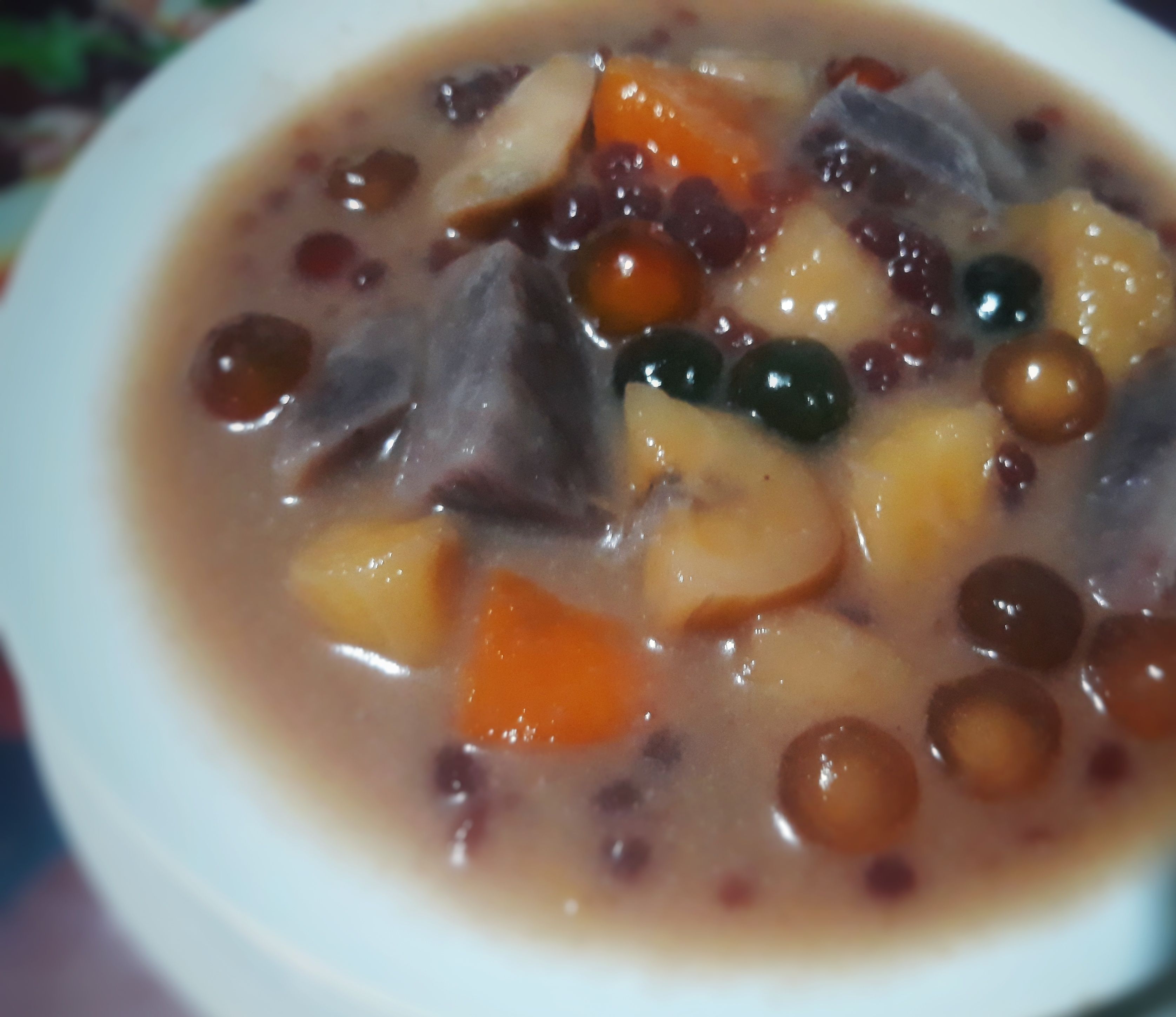
Binignit is either served hot or cold and often enjoyed as dessert or midday snack. Binignit is also called “giná-tan” in Bikolano, “tabirák” in Mindanao Cebuano, “alpahor” in Chavacano, “ginettaán” in Ilokano, “ginat-an” (or ginat-ang lugaw) in Waray and Hiligaynon/Ilonggo, “kamlo” in western Iloilo and linugaw in Bacolod City.
Binignit is considered a type of lugaw(rice gruel) and guinataán (dishes cooked in coconut milk). The meat of a mature coconut is grated and the “thick” milk is extracted. Two cups of water are added to the grated coconut and a second extraction is made. This becomes the “thin” milk. This “thin” coconut milk extract is added to cubed kamote (sweet potato), gabi(taro) and ube (purple yam), sliced ripe sabá (plantain) and langka (jack fruit), and tapioca pearls. Sometimes, young coconut meat strips are also added. This is simmered on low to medium heat, to prevent the coconut milk from curdling. Glutinous rice is added once the root crops have sufficiently softened and the mixture is brought to a boil; being stirred occasionally until done. Just before removal from the flame, the “thick” coconut milk is added. The people of the neighbouring island of Leyte usually include landang (palm flour jelly balls), jackfruit, and anise, and thicken it with milled glutinous rice. The vegetables and the pearl sago are cooked in a mixture of water, coconut milk and landang, and sweetened by muscovado or brown sugar. The soup is usually cooked and eaten during Holy Week, especially during Good Friday when observant Catholics fast and avoid meat. A popular afternoon snack, it is best served when hot. Others serve it chilled or even frozen, eating the dessert much like ice cream. Binignit is a warm root crop and fruit stew consisting of a thick mixture of tubers such as taro, purple yam, sweet potato, as well as bananas, jackfruit, sago, tapioca pearls and sugar, cooked in coconut milk and thickened with milled glutinous rice.
Ingredients
• 4 cups coconut milk
• 2 cups water
• ½ cup glutinous rice
• 4 to 5 pieces gabi (taro), peeled and cut into 1-inch cubes
• 4 to 5 pieces purple yam, peeled and cut into 1-inch cubes
• 2 medium kamote, peeled and cut into 1-inch cubes
• 2 saba bananas, peeled and cubed
• 1 cup cooked sago
• 1 cup ripe jackfruit (langka), shredded
• 1 cup coconut cream
• ½ cup brown sugar
Instructions
1. In a pot over medium heat, combine coconut milk and water. Bring to a simmer (DO NOT BOIL as milk will curdle).
2. Add glutinous rice and cook, stirring occasionally, for about 8 to 10 minutes. Add gabi, purple yams and kamote. Cook, stirring occasionally, for about 15 to 20 minutes or until tender.
3. Add bananas, sago and jackfruit. Add coconut cream and stir to combine. Add brown sugar and continue to cook, stirring occasionally, for about 8 to 10 miinutes. Serve hot or cold. Notes If you are using bottled jackfruit and sago packed in syrup, add their syrup to the binignit for extra flavor but decrease amount of sugar to taste.
 Gourmet's